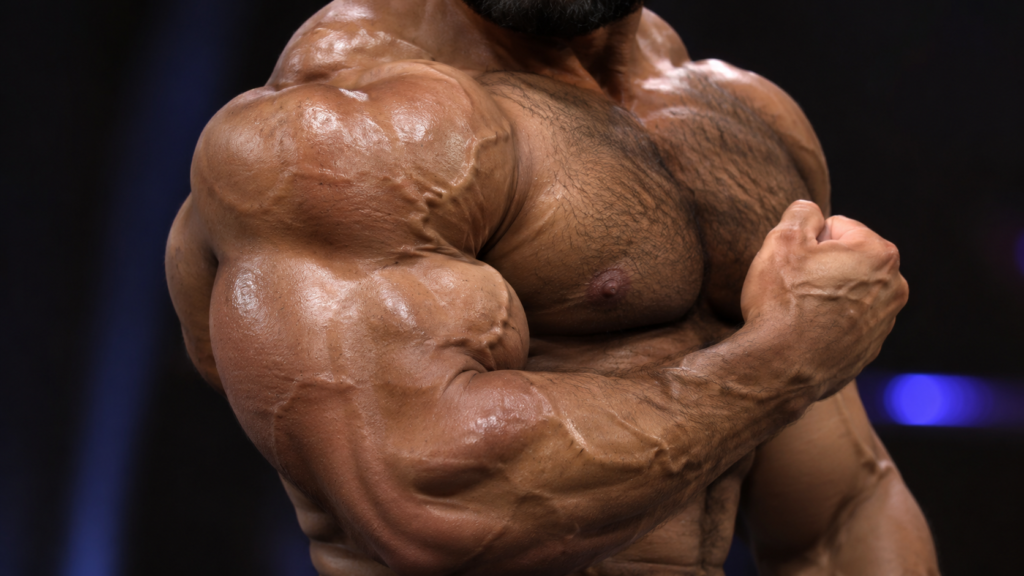
Bodybuilding’s troubling death toll: how many warnings are enough?
IPSEI Pulse | Issue #9
Date of release: November 22, 2026
Period examined: 2021–2026
Three days after winning a gold medal at the Asian Bodybuilding Championships in Thailand, Iraqi bodybuilder Sajad Jawad was dead.
His death, confirmed by Iraq’s national bodybuilding federation on November 19, came just as his sporting career had reached a new high. The federation did not disclose a medical cause, and there is no verified evidence connecting his death to competition preparation or the use of performance-enhancing substances.
Yet the tragedy has brought renewed attention to a troubling pattern: the premature deaths of competitive bodybuilders across different countries, often at ages when elite athletes would ordinarily be expected to enjoy exceptional physical health.
Jawad was not the only bodybuilder whose death made international headlines in November 2026. Brazilian professional Itemberg Nunes died at 31, while Scottish professional competitor Alix Small died at 26. Neither death has been publicly attributed to a confirmed medical cause.
The wider question is not whether these athletes died from the same condition. There is no evidence that they did. It is whether the growing body of medical research and repeated reports of premature deaths should prompt stronger preventive measures across competitive bodybuilding.
A post-COVID timeline: 2021–2026
The following cases were reported during the six-year period beginning in 2021. They represent selected documented deaths of professional competitors, former professionals and other prominent competitive bodybuilders, rather than a comprehensive international mortality register.
The circumstances differ considerably. Some deaths were associated with reported cardiovascular emergencies; others involved different medical conditions or remain unexplained.
2021
- George Peterson, United States — 37. The professional bodybuilder was found dead in an Orlando hotel shortly before the Mr. Olympia competition. A subsequent investigation by The Washington Post examined the circumstances surrounding his death and the wider health risks associated with extreme bodybuilding preparation. The Washington Post — investigation.
- Shawn Rhoden, Jamaica/United States — 46. The 2018 Mr. Olympia champion died in November 2021. A heart attack was reported in bodybuilding media, although the initial announcement did not provide a confirmed medical cause. BarBend — death report.
- John Meadows, United States — 49. The former professional bodybuilder and prominent coach died unexpectedly at his home on August 8, 2021. He had suffered a heart attack associated with blood clots in 2020. Subsequent scientific commentary in the European Heart Journal identified pulmonary embolism as the cause of his death. BarBend — death report | European Heart Journal — scientific commentary.
- Alena Hatvani-Kosinová, Czech Republic — 46. The IFBB professional bodybuilder died on August 15, 2021, shortly before the Europa Pro competition in Alicante, Spain. According to an investigation by The Washington Post, she experienced severe muscle cramps before losing consciousness. Witnesses described her use of diuretics during competition preparation. However, the precise medical cause of her death was not independently established in the published investigation. Ronnie.cz — original death report | The Washington Post — investigation.
2022
- Cedric McMillan, United States — 44. The Arnold Classic champion died in April following a prolonged period of reported health problems. His sponsor confirmed his death without disclosing an official medical cause. ABC News — death report.
- Stacey Cummings, United States — 31. The IFBB professional competitor died in April. Her death was reported following announcements by people close to her, with no confirmed cause publicly disclosed. Generation Iron — death report.
- Paul Poloczek, Poland/Germany — 37. The professional bodybuilder died shortly after participating in a championship in Germany. His wife announced his passing, while the cause remained undisclosed in contemporary reports. Evening Standard — death report.
2023
- Neil Currey, United Kingdom — 34. The IFBB professional and Olympia competitor died in September. His former coach publicly reported suicide, although the initial coverage noted the absence of a released official medical report. His case should not be grouped with confirmed sudden cardiac deaths. Muscle Insider — death report.
- Christian Figueiredo, Brazil — 29. The bodybuilding champion died in October following complications associated with surgery. According to reports cited by CNN Brasil, friends described a stroke and haemorrhage following a medical procedure. CNN Brasil — report.
2024
- Illia Yefimchyk, Belarus — 36. The internationally known bodybuilder, also known as Illia Golem, died in September following a reported cardiac emergency. He was primarily known for his extraordinary physique and public profile rather than a documented IFBB professional competition career. Muscle & Fitness — death report.
2025
- Jodi Vance, United States — 20. The young competitive bodybuilder died in February during the period of the Arnold Sports Festival. Her family reported that her heart had stopped following complications associated with severe dehydration. People — family statements and death report.
- Lorena Blanco, Spain — 37. The IFBB Pro League Bikini competitor died in July after a reported heart attack at home. She had been competing internationally during the 2025 season. BarBend — death report.
2026
- Jason Lowe, United States — 38. The competitive bodybuilder died in January. His wife publicly announced his death, but no cause was provided in the available report. People — death report.
- Mateusz Chmura, Poland/United Kingdom — 33. The competitor collapsed during the Physical Culture Association British Finals in October and later died. The organisers acknowledged the emergency response, while the official cause of death remained undisclosed. Nine — competition and organisers’ statement.
- Alix Small, United Kingdom — 26. The Scottish two-time IFBB Pro League Fitness champion died in November. She had previously competed at Olympia level. No confirmed cause of death was publicly disclosed. TMZ — death report.
- Itemberg Nunes, Brazil — 31. The professional Men’s Physique competitor died on November 19. His sponsor confirmed his death, without announcing a medical cause. ge.globo — report citing the sponsor’s announcement.
- Sajad Jawad, Iraq — age not independently verified. The Asian championship gold medallist died three days after his victory in Thailand. The Iraqi bodybuilding federation confirmed his death but did not disclose a medical cause. Gulf News — report citing the federation.
These 17 cases illustrate the breadth of the issue, but they cannot be treated as evidence that all deaths were sudden cardiac events, that all athletes used prohibited substances, or that bodybuilding practices caused their deaths.
They also cannot establish whether the frequency of premature deaths increased after COVID-19. That requires population-based comparisons rather than a collection of media reports.
The scientific evidence is more revealing
In May 2025, researchers published Mortality in male bodybuilding athletes in the European Heart Journal.
The study examined 20,286 male bodybuilders who had participated in 730 International Federation of Bodybuilding and Fitness competitions between 2005 and 2020. Mortality follow-up continued until July 2023.
Researchers identified 121 deaths, of which 73 were classified as sudden deaths and 46 as sudden cardiac deaths.
Among athletes who had competed within the preceding year, the incidence of sudden cardiac death was estimated at 32.83 cases per 100,000 athlete-years.
Professional bodybuilders had a significantly higher risk of sudden cardiac death than amateur competitors, with a hazard ratio of 5.23.
Where autopsy information was available for sudden cardiac death cases, the researchers consistently observed cardiac enlargement and ventricular hypertrophy.
The findings were particularly important because they moved the discussion beyond individual news reports and provided systematic evidence of cardiovascular risk in a large international bodybuilding population.
The research was not a clinical trial, and it did not establish the precise contribution of performance-enhancing substances or particular training practices to individual deaths.
A second study, Mortality in female bodybuilding athletes, published online in October 2025, examined 9,447 female bodybuilders. It identified 32 deaths, including 10 sudden cardiac deaths.
Taken together, the two studies recorded 153 deaths across 29,733 athletes, although the cohorts and observation periods must be understood in their original research context.
An earlier scientific review, Premature Death in Bodybuilders: What Do We Know?, also examined premature deaths in the bodybuilding community and the methodological challenges involved in interpreting them.
These studies provide grounds for concern, but they do not demonstrate that every death in the 2021–2026 timeline resulted from the same underlying process.
Why the post-COVID period deserves attention
The choice of 2021–2026 as the period of examination is not incidental.
COVID-19 changed the global health environment, while research into its long-term consequences has continued to reveal important cardiovascular and immunological findings.
A major study published in Nature Medicine, Long-term cardiovascular outcomes of COVID-19, analysed 153,760 people with documented COVID-19 and large comparison populations.
Researchers found an increased risk of several cardiovascular conditions beyond the first 30 days following infection, including heart rhythm disorders, heart failure, inflammatory cardiac conditions and thromboembolic disease.
A 2024 study published in Nature Immunology, Long COVID manifests with T cell dysregulation, inflammation and an uncoordinated adaptive immune response to SARS-CoV-2, identified persistent immune abnormalities among some individuals experiencing long COVID.
Another study, published in Nature Communications, Improvement of immune dysregulation in individuals with long COVID at 24-months following SARS-CoV-2 infection, examined how these immune disturbances evolved over time, including evidence of improvement.
A further investigation in Cardiovascular Research, Coronavirus disease 2019–related myocardial injury is associated with immune dysregulation in symptomatic patients with cardiac magnetic resonance imaging abnormalities, explored the relationship between immune abnormalities and cardiac injury in a selected group of patients following infection.
Together, these studies show that COVID-19 can have persistent effects on immune regulation and cardiovascular health in some individuals.
They do not establish that COVID-19 permanently weakened the immune systems of all infected people, nor that it caused the deaths of the bodybuilders documented above.
Nevertheless, the findings introduce a legitimate question for sports medicine: could post-infection cardiovascular vulnerabilities interact with the exceptional physiological demands of competitive bodybuilding?
At present, that remains a research question rather than an established explanation.
When physical perfection conceals medical risk
Competitive bodybuilding presents a distinctive challenge for athlete health.
The sport rewards muscular development, definition, symmetry and extremely low levels of visible body fat. Some competitors pursue these objectives through severe dietary restriction, dehydration strategies and rapid changes in body composition.
The misuse of anabolic-androgenic steroids, diuretics and stimulants can introduce additional cardiovascular and metabolic risks.
An investigation by The Washington Post in 2022 documented concerns about extreme contest preparation, drug use and the pressures faced by competitors.
Yet the risks are not identical for every athlete. Training methods, medical histories, substance exposure, genetics and underlying health conditions differ substantially.
It would therefore be scientifically inappropriate to infer the cause of an individual’s death solely from their participation in bodybuilding.
The more constructive question concerns prevention.
Could cardiovascular screening become more systematic? Should medical monitoring extend into the days following competition? Are athletes receiving sufficient information about dehydration, electrolyte disturbances and the combined risks of extreme preparation?
And are competition organisers, coaches and sporting institutions doing enough to recognise warning signs before a medical emergency occurs?
A warning that deserves a response
The deaths of Sajad Jawad and other competitors are individual human tragedies, not statistics to be treated as interchangeable.
Their circumstances differ, and many medical questions remain unanswered.
But the scientific evidence now provides a compelling reason to examine the cardiovascular health of competitive bodybuilders more closely.
The post-COVID period adds a further dimension to that discussion, without establishing a causal link between the pandemic and the deaths reported here.
Ultimately, the issue is not whether exceptional physiques can be achieved. It is whether competitive success is being pursued within a system that adequately protects the people striving for it.
A sport built around the appearance of physical strength must also take seriously the health of the athletes behind that appearance.
In a world where the pursuit of physical perfection, records, and spectacle can overshadow human vulnerability, ethics in sport must stand above all else — ahead of medals, titles, and commercial ambition.
Against the sobering scientific evidence and the human losses of recent years, true sporting integrity means placing the life, health, and dignity of every athlete above the demands of the stage.
IPSEI Pulse is an analytical note by the International Platform for Sport Ethics & Integrity, tracking emerging developments across sport integrity, ethics, governance and public attention.
This analysis reflects IPSEI’s independent analytical perspective and is based on publicly available news reports, scientific publications and medical research. The cases presented represent selected reported deaths rather than a comprehensive mortality register. References to individual athletes do not imply that their deaths were caused by doping, competition preparation, COVID-19 or any other common factor. The analysis is intended for informational and research purposes only and does not constitute a medical determination, an allegation of wrongdoing, or an assessment of institutional performance. The views expressed should not be attributed to the institutions cited or to any other organisation with which the author may be affiliated.

Thank you for your rating!
Share your thoughts