The IOC’s new governance model: What does it mean for gender equality?
IPSEI Pulse | Issue #6
Date of release: October 17, 2026
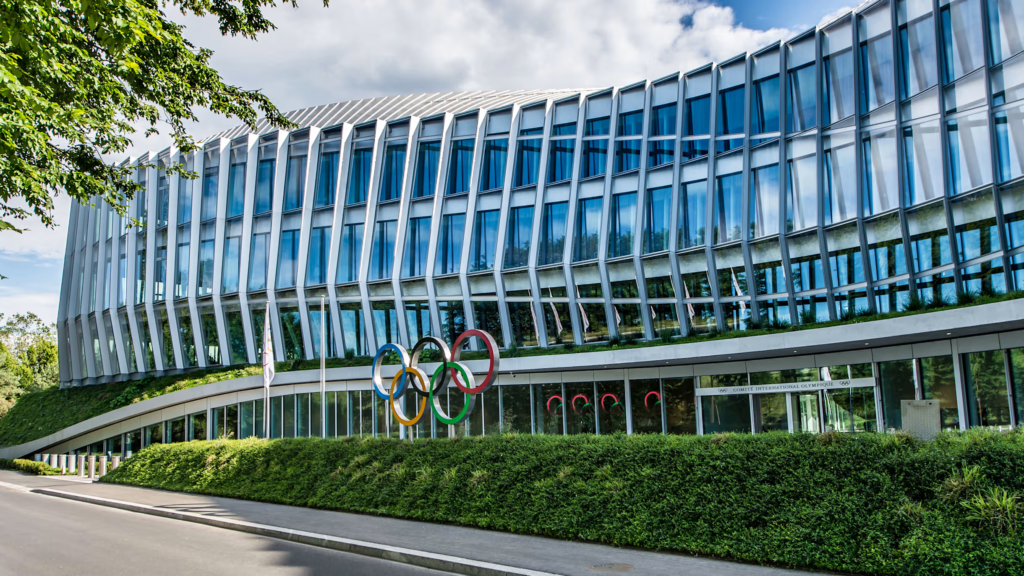
The International Olympic Committee (IOC) has announced a significant transition in its approach to stakeholder engagement, moving from a commission-based model towards dedicated working groups with clearly defined mandates.
According to the official IOC announcement of October 16, 2026, the Gender Equality, Diversity and Inclusion Commission is among the non-institutional commissions that will be discontinued.
The decision follows more than a year of consultation and review under the Fit for the Future initiative. The IOC has identified dedicated working groups as a flexible mechanism for engaging expertise, developing policies and supporting institutional decision-making.
Gender equality within the evolving framework
The organisational transition takes place alongside the IOC’s continuing strategic commitments to equality and inclusion.
On June 24, 2026, the IOC Session endorsed its strategic direction towards 2032, identifying the advancement of equality and inclusion across the Olympic Movement and beyond as an important objective.
More recently, in an October 14, 2026 publication, IOC Director of Health, Medicine and Science Dr Jane Thornton emphasised the importance of ensuring access to sport for women and girls as an essential dimension of health equity.
These developments provide an important context for understanding the institutional transition. While the IOC’s strategic objectives remain clearly articulated, the new organisational arrangements invite further examination of how gender equality will be addressed in practice.
Questions emerging from the transition
Will gender equality be addressed through a dedicated working group, or integrated as a cross-cutting priority across different areas of IOC governance?
How will responsibilities for gender mainstreaming be defined and coordinated within the new institutional framework?
How will the model address different dimensions of gender equality, including women’s participation, leadership, coaching and representation in decision-making?
What mechanisms will support institutional continuity, the exchange of expertise and the monitoring of progress?
And how will National Olympic Committees, International Federations and other relevant stakeholders contribute to the implementation of gender equality objectives within the evolving framework?
Strategic perspective
The IOC’s transition introduces a different institutional approach to stakeholder engagement, with an emphasis on specialised expertise, clearly defined mandates and flexibility.
From a sport governance perspective, the key analytical question concerns how gender mainstreaming will be operationalised within this model, particularly in relation to the allocation of responsibilities, institutional coordination and the monitoring of policy implementation.
The evolving framework provides an opportunity to examine how dedicated working groups and cross-cutting policy objectives can be organised within international sport governance.
Further clarification of the institutional arrangements will help establish how the IOC’s long-term gender equality objectives are translated into operational responsibilities and coordinated action across the Olympic Movement.
IPSEI Pulse is an analytical note by the International Platform for Sport Ethics & Integrity, tracking emerging developments across sport integrity, ethics, governance and public attention.
This analysis reflects IPSEI’s independent analytical perspective and is based exclusively on official public statements issued by the International Olympic Committee (IOC) in 2026. It does not represent the position of the IOC or of any external institution with which IPSEI’s authors or contributors may be affiliated. It should not be interpreted as an allegation of wrongdoing or as a legal, regulatory or institutional determination.


Thank you for your rating!
Share your thoughts