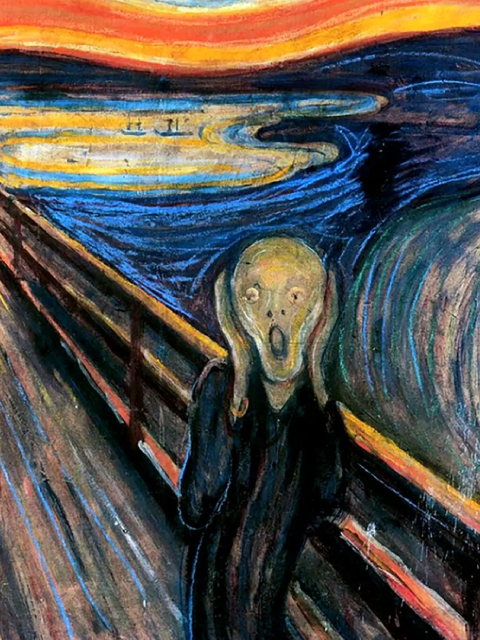
Essay I: The Fear of Remaining Natural
Rufat Efendiyev, Ph.D., Assoc. Prof.
Founder & Director
IPSEI | International Platform for Sport Ethics & Integrity
Introduction. The Human Condition in the Age of Optimization
… Imagine a young professional checking LinkedIn before starting the day. Within minutes, he, or she encounters colleagues announcing promotions, entrepreneurs celebrating new ventures, academics sharing publications, athletes displaying extraordinary achievements, and influencers documenting carefully curated versions of success. None of these individuals may have intended to create pressure. Yet collectively, they contribute to a subtle but powerful message: improvement is expected, and standing still is not an option.
A similar pattern unfolds elsewhere. Fitness applications reward constant progress. Productivity tools measure efficiency. Social media platforms encourage self-presentation and comparison. The language of modern life increasingly revolves around optimization, growth, and performance. Across many domains, individuals are encouraged not simply to develop but to continuously upgrade themselves.
This cultural environment would have been unfamiliar to most people throughout history. Human beings have always sought improvement, but improvement was traditionally understood within the limits of the human condition. Physical vulnerability, ageing, fatigue, imperfection, and failure were accepted as ordinary aspects of life rather than problems requiring constant intervention. To become wiser, more virtuous, or more skilled was desirable. To become something fundamentally beyond oneself was rarely viewed as a social expectation.
Today, however, a different question appears to be emerging. It is no longer simply whether individuals can improve. Increasingly, the question becomes whether they can afford not to.
This essay explores a possibility that has received surprisingly little attention in contemporary discussions about performance, self-development, and human flourishing: the gradual emergence of what may be called the fear of remaining natural. Rather than focusing on any single field or technology, the discussion begins with broader philosophical and psychological transformations that have altered the way people understand themselves and their limitations.
1. From Human Condition to Human Project
For much of recorded history, human limitations were not generally interpreted as defects. In ancient philosophy, the challenge was not to eliminate every limitation but to learn how to live wisely within them. For Aristotle, human flourishing was achieved through the cultivation of virtue. For the Stoics, including Marcus Aurelius, fulfilment depended less on changing external circumstances than on developing inner character.
The assumption underlying these traditions was remarkably simple: human beings were imperfect by nature. The goal was not perfection but excellence within natural limits.
Over time, however, Western societies gradually adopted a different understanding of the self. The rise of industrialization, scientific progress, and technological innovation contributed to a growing belief that human limitations could be identified, measured, managed, and eventually overcome. What had once been accepted as part of life increasingly came to be viewed as a challenge requiring improvement.
Sociologist Zygmunt Bauman observed that modern individuals are no longer merely expected to occupy stable social roles; they are increasingly expected to continuously construct and reconstruct themselves. Identity becomes less a state of being and more a permanent project of becoming.
Perhaps nowhere is this transformation more visible than in the language people use about themselves. Earlier generations often spoke about duty, character, or responsibility. Contemporary discourse frequently emphasizes optimization, self-improvement, personal branding, peak performance, and self-transformation. The individual increasingly becomes both the architect and the manager of their own development.
This shift has produced many benefits. It has expanded opportunities, encouraged personal growth, and challenged inherited constraints. Yet it has also introduced a new form of pressure. When the self becomes a project, incompleteness is no longer simply a human condition. It becomes a problem to be solved.
The consequences of this transformation become even clearer when viewed through the lens of psychology. During the twentieth century, researchers began to demonstrate that human beings do not evaluate themselves in isolation. Instead, they constantly compare themselves with others—a process that would profoundly reshape modern experiences of adequacy, success, and self-worth.
2. The Age of Comparison
If the modern self increasingly became a project, another development transformed the way that project would be evaluated: the expansion of social comparison.
Human beings have always compared themselves to others. A farmer might once have compared his harvest to that of a neighbour. A craftsperson might have measured their skill against that of a local competitor. Such comparisons were limited by geography, community, and the relatively small number of people one encountered throughout life.
The twentieth century changed this dramatically.
In his influential paper, A Theory of Social Comparison Processes, psychologist Leon Festinger argued that individuals possess a fundamental drive to evaluate their abilities and opinions by comparing themselves with others. When objective standards are unavailable, people naturally turn to social comparison as a source of self-evaluation.
Festinger published this theory in 1954, long before the internet, smartphones, or social media. Yet his insight appears remarkably relevant today. Modern individuals no longer compare themselves with dozens of people. They compare themselves with thousands—sometimes millions.
A student preparing a university application can instantly compare achievements with top-performing peers across the world. A young entrepreneur can observe the success stories of business founders on multiple continents. A recreational runner can track their performance against global rankings. A professional can measure career progress against colleagues they have never met.
For the first time in human history, comparison has become nearly continuous.
Importantly, social comparison is not inherently harmful. It can inspire ambition, learning, and personal growth. Many achievements emerge precisely because individuals are motivated by observing what others have accomplished.
The challenge arises when comparison ceases to function as occasional information and begins to operate as a permanent environment.
In previous centuries, people generally lived among individuals with similar lifestyles, opportunities, and resources. Today, social media platforms, digital networks, and algorithmic recommendation systems expose individuals to highly selective representations of success. What people encounter is often not ordinary life but carefully curated highlights of achievement, attractiveness, productivity, and performance.
As a result, comparison itself changes character. It becomes increasingly difficult to determine what constitutes a realistic standard. Exceptional outcomes, once recognized as exceptional, gradually begin to appear normal.
A promotion becomes less impressive when another colleague announces a larger one. Completing a marathon appears less remarkable when someone else shares an ultramarathon. Publishing an article feels less significant when social feeds display dozens of publications from researchers around the world.
The issue is not envy. It is calibration.
The benchmarks through which individuals evaluate themselves are constantly shifting upward.
Over time, this creates a subtle psychological consequence. People may continue to improve while simultaneously feeling inadequate. Achievement no longer guarantees satisfaction because standards evolve faster than perceptions of success.
In such an environment, remaining unchanged can begin to feel less like stability and more like decline.
This transformation laid the groundwork for another development identified by psychologists decades later: the growing gap between who people are and who they believe they should become.
3. The Gap Between Who We Are and Who We Believe We Should Be
Not all dissatisfaction originates from failure.
A person may be healthy, educated, professionally successful, and socially connected, yet still experience a persistent sense of inadequacy. Such feelings often emerge not from objective shortcomings but from the growing distance between reality and aspiration.
In 1987, psychologist E. Tory Higgins proposed what became known as Self-Discrepancy Theory. According to Higgins, individuals simultaneously hold multiple versions of themselves. There is the actual self—the person one believes oneself to be. There is the ideal self—the person one wishes to become. And there is the ought self—the person one feels obligated to become in order to meet social expectations.
Psychological discomfort often arises when these versions drift apart.
The greater the distance between the actual self and the ideal self, the more likely individuals are to experience disappointment, frustration, or dissatisfaction. Likewise, a gap between the actual self and the ought self may generate anxiety, guilt, or a sense of failing to meet expectations.
What makes this theory particularly relevant today is not merely the existence of these discrepancies, but their expansion.
Throughout much of history, ideals were often constrained by local realities. Most people compared themselves with individuals who lived similar lives and faced similar circumstances. The ideal self, while aspirational, remained relatively attainable.
Modern societies have dramatically altered this relationship.
Today, the ideal self is no longer shaped solely by family, community, or profession. It is increasingly influenced by global networks, digital platforms, celebrity culture, expert advice, self-improvement industries, and algorithmically amplified success stories.
As a result, the ideal self has become both more visible and more demanding.
One is encouraged to be productive but also balanced. Successful but humble. Ambitious but authentic. Physically fit but mentally resilient. Socially connected but independent. Constantly improving while simultaneously appearing effortless.
The list rarely ends.
Perhaps one of the defining characteristics of contemporary life is that aspirations are no longer temporary goals. They increasingly become permanent obligations.
In such circumstances, self-development can gradually transform into self-surveillance.
Individuals begin monitoring themselves not only for what they have achieved, but also for what they have not yet become.
A researcher may focus less on completed work than on colleagues with longer publication records. An entrepreneur may evaluate success not by business stability but by comparison with rapidly growing competitors. A recreational athlete may derive less satisfaction from personal improvement than from rankings, benchmarks, and performance metrics.
Achievement remains present, yet satisfaction becomes elusive.
This phenomenon reveals an important distinction. Human beings are not necessarily becoming less capable. In many respects, they may be more educated, healthier, and more connected than previous generations. Yet they often report feeling insufficient despite these advantages.
The problem may therefore lie not in the actual self, but in the relentless expansion of the ideal self.
As ideals continue to evolve, the experience of “being enough” becomes increasingly fragile.
And once the expectation of improvement becomes deeply embedded in social life, a further transformation begins to take place. Excellence gradually shifts from a personal aspiration to a social expectation.
4. The Social Demand for Perfection
For much of history, excellence was admired but not universally expected.
Exceptional artists, scholars, athletes, inventors, and leaders were recognized precisely because they were exceptional. Their achievements stood apart from ordinary life. Most people were not expected to perform at extraordinary levels in multiple domains simultaneously.
Contemporary societies appear to be moving toward a different model.
Increasingly, excellence is no longer confined to specific achievements. It expands into everyday expectations.
Individuals are encouraged to build successful careers, maintain physical fitness, cultivate meaningful relationships, remain emotionally resilient, continue learning throughout life, manage their finances responsibly, and adapt continuously to changing technological and social environments.
Each expectation may appear reasonable in isolation.
Collectively, however, they create something unprecedented.
Perfection ceases to be an aspiration and begins to function as a benchmark.
Psychologists Paul Hewitt and Gordon Flett identified an important dimension of this phenomenon through their work on socially prescribed perfectionism. Unlike perfectionism that originates from personal ambition, socially prescribed perfectionism reflects the perception that others expect perfection and that acceptance depends upon meeting those expectations.
This distinction is crucial.
The pressure no longer comes primarily from within.
It increasingly appears to come from the surrounding environment.
A student may feel expected to excel academically while simultaneously developing leadership skills, maintaining social engagement, and preparing for a competitive labour market.
A professional may feel expected to remain permanently productive, adaptable, innovative, and visible.
A parent may feel expected to optimize family life, personal health, financial stability, and emotional wellbeing simultaneously.
In each case, the challenge is not a single expectation but the accumulation of expectations.
The modern individual becomes responsible not only for living but also for continuously improving every aspect of life.
What emerges is a subtle but significant transformation.
The question gradually shifts from:
“Can I become better?”
to:
“Why am I not becoming better faster?”
The difference may appear minor, yet psychologically it is profound.
One reflects aspiration.
The other reflects inadequacy.
At this point, it may be useful to introduce a broader observation.
If previous generations experienced social pressure to succeed, contemporary societies increasingly appear to generate pressure to optimize. Success is no longer evaluated solely through achievements. It is assessed through the continuous management and enhancement of one’s capabilities.
One might describe this tendency as biological perfectionism.
The term does not refer to a clinical condition. Rather, it reflects a cultural orientation in which the body itself becomes subject to the same expectations of optimization that already govern careers, education, productivity, and personal development.
In such an environment, physical limitations are increasingly interpreted not as natural realities but as opportunities for improvement.
Fatigue becomes a performance problem.
Ageing becomes a management challenge.
Recovery becomes an optimization target.
Even ordinary human variation begins to appear as something requiring intervention.
The body gradually shifts from being a part of the self to becoming a project under continuous review.
This development raises an important question.
If excellence becomes expected and optimization becomes normalized, what happens to the experience of simply being human?
The answer begins to emerge when we examine how modern societies have come to view the body itself.
5. The Body as an Unfinished Project
There was a time when the human body was largely understood as a given.
People could strengthen it, train it, nourish it, or care for it. Yet the body itself was generally perceived as something one inhabited rather than something one continuously redesigned.
In contemporary societies, this relationship appears to be changing.
Increasingly, the body is not merely experienced. It is monitored.
Steps are counted.
Calories are tracked.
Sleep is measured.
Heart rates are analysed.
Workouts are recorded.
Recovery is quantified.
From smartphones to wearable technologies, individuals now possess an unprecedented ability to observe themselves in real time.
At first glance, these developments seem unquestionably beneficial. Many have helped people become more aware of their health, improve physical activity, and make informed lifestyle choices.
Yet they have also introduced a subtle psychological shift.
The body is no longer simply lived through.
It is increasingly managed through data.
What was once felt is now measured.
What was once experienced is now evaluated.
What was once enough is now compared against a benchmark.
Sociologists have long noted that modern societies encourage individuals to engage in forms of self-monitoring that previous generations would have found unimaginable. In their influential work on objectified body consciousness, Nita Mary McKinley and Janet Shibley Hyde argued that individuals increasingly learn to view their own bodies from an observer’s perspective, evaluating themselves through external standards rather than internal experience.
This observation extends far beyond physical appearance.
The modern body is increasingly expected to demonstrate progress.
A good night’s sleep is no longer simply restorative; it is reflected in a score.
A walk is no longer merely enjoyable; it contributes to a target.
Exercise is no longer solely about movement; it becomes part of a performance metric.
Even rest increasingly requires justification through measurable outcomes.
One of the most remarkable features of this transformation is that it often occurs voluntarily.
Unlike many forms of social control discussed by earlier generations of scholars, contemporary self-monitoring is frequently embraced rather than resisted. Individuals willingly purchase devices, applications, and services that allow them to track their performance in ever greater detail.
The result is a new relationship between the individual and the body.
The body becomes a project under permanent evaluation.
Importantly, this does not necessarily produce dissatisfaction. For many people, self-monitoring can be motivating, informative, and empowering.
The challenge emerges when measurement begins to redefine identity.
A person who sleeps well may feel concerned because an application reports a low sleep score.
Someone who feels physically healthy may become anxious after reviewing biometric indicators.
The subjective experience of wellbeing gradually loses authority to objective measurement.
Data begins to tell individuals how they should feel.
At this point, an important distinction begins to blur.
The body is no longer valued solely for what it allows people to experience.
It is increasingly valued for how effectively it performs.
This may represent one of the most significant cultural shifts of the modern era.
Historically, individuals sought to improve their bodies.
Today, many individuals appear to feel responsible for continuously optimizing them.
The difference is subtle, yet profound.
Improvement has an endpoint.
Optimization does not.
A person can become stronger, healthier, or fitter.
But optimization contains no natural limit.
There is always another metric to improve, another benchmark to reach, another version of oneself to pursue.
Perhaps this is why many people report a paradoxical experience. Despite unprecedented access to health information, fitness resources, and technologies for self-improvement, feelings of inadequacy often persist.
The project is never truly finished.
And perhaps it was never designed to be.
As the body increasingly becomes an object of continuous optimization, a deeper question begins to emerge. What happens when improvement is no longer experienced as a choice, but as a social expectation? What happens when remaining unchanged begins to feel like falling behind?
These questions lead us directly to what may be the central anxiety underlying many contemporary forms of self-improvement.
The fear of remaining natural.
6. The Fear of Remaining Natural
The anxieties discussed throughout this essay may appear diverse.
Social comparison.
Perfectionism.
Self-discrepancy.
Body monitoring.
Continuous optimization.
Yet beneath these seemingly different phenomena, a common thread begins to emerge.
Each reflects a changing relationship between human beings and their own limitations.
Historically, limitations were often understood as conditions to be navigated. They shaped human experience but did not necessarily diminish human worth.
Contemporary culture increasingly approaches limitations differently.
Limitations are identified.
Measured.
Tracked.
Managed.
Improved.
Optimized.
In many cases, this process generates meaningful benefits. Scientific progress, medical innovation, education, and technological development have improved human wellbeing in countless ways.
The purpose of this observation is not to criticize improvement.
The question is whether improvement has gradually ceased to be optional.
A subtle shift appears to have occurred.
People no longer evaluate themselves solely according to what they have achieved.
Increasingly, they evaluate themselves according to what remains unimproved.
The focus moves from capability to deficiency.
From accomplishment to potential.
From progress to the distance still left to travel.
Under such conditions, adequacy becomes difficult to experience.
One can always be healthier.
More productive.
More resilient.
More attractive.
More informed.
More efficient.
More optimized.
The horizon continues to move…
And as it moves, something unusual begins to happen.
The fear of failure gradually gives way to a different kind of anxiety.
The fear of insufficiency.
Not necessarily the fear of becoming worse.
Not necessarily the fear of losing.
But the fear that one’s natural state may no longer be enough.
This fear is rarely expressed directly.
Few people wake up in the morning and consciously think: “I am afraid of remaining natural.”
Yet many everyday behaviours appear consistent with such a concern.
The relentless pursuit of self-improvement.
The discomfort of inactivity.
The pressure to remain competitive.
The constant search for greater performance, greater efficiency, and greater control.
Taken individually, these behaviours may seem rational.
Taken together, they suggest the emergence of a deeper cultural orientation.
One in which natural limitations become increasingly difficult to accept.
Perhaps this represents one of the defining tensions of contemporary life.
Human beings have acquired unprecedented capacities to improve themselves, yet the experience of being enough appears increasingly fragile.
The more opportunities for improvement become available, the more difficult it can become to feel complete.
This observation does not imply that individuals should abandon ambition or reject progress.
Nor does it suggest that human development is undesirable.
Rather, it raises a philosophical question.
Can a society built around continuous improvement preserve a meaningful place for human adequacy?
Can individuals continue to value themselves independently of their capacity to optimize?
Can limitations remain part of human dignity rather than evidence of personal failure?
These questions extend far beyond any single profession, technology, institution, or field of activity.
They concern the way modern societies understand the human condition itself.
And perhaps this is why the fear of remaining natural deserves greater attention.
Not because it is already fully visible.
But because it may be quietly shaping how millions of people understand themselves.
Closing Reflection
Perhaps the most important question is not whether human beings are becoming more capable, more productive, or more efficient. The deeper question is why so many people increasingly struggle to regard their natural, unenhanced selves as enough.
The fear of remaining natural does not emerge in isolation. It develops within social environments, cultural expectations, and systems of comparison that continuously redefine what it means to be enough. What begins as a psychological experience gradually acquires broader significance. It shapes aspirations, behaviours, and perceptions of self-worth. Over time, it becomes woven into the fabric of everyday life.
Yet once feelings of insufficiency become widespread, measurable, and predictable, they cease to be merely personal concerns.
They become social forces.
Understanding how this transformation occurred is important. Understanding what follows may be even more important.
For when insecurity becomes scalable, markets inevitably follow.
References
Appel, H., Gerlach, A. L., & Crusius, J. (2016). The interplay between Facebook use, social comparison, envy, and depression. Current Opinion in Psychology, 9, 44–49.
https://doi.org/10.1016/j.copsyc.2015.10.006
Aristotle. (2009). Nicomachean ethics (W. D. Ross, Trans.). Oxford University Press. (Original work published ca. 350 BCE).
https://www.perseus.tufts.edu/hopper/text?doc=Aristot.+Nic.+Eth
Bauman, Z. (2000). Liquid modernity. Polity Press.
https://www.wiley.com/en-us/shop/general-sociology/liquid-modernity-p-9780745624105
Crawford, R. (2006). Health as a meaningful social practice. Health, 10(4), 401–420.
https://doi.org/10.1177/1363459306067310
Curran, T., & Hill, A. P. (2019). Perfectionism is increasing over time: A meta-analysis of birth cohort differences from 1989 to 2016. Psychological Bulletin, 145(4), 410–429.
https://psycnet.apa.org/doiLanding?doi=10.1037bul0000138
Festinger, L. (1954). A theory of social comparison processes. Human Relations, 7(2), 117–140.
https://journals.sagepub.com/doi/10.1177/001872675400700202
Hewitt, P. L., & Flett, G. L. (1991). Perfectionism in the self and social contexts: Conceptualization, assessment, and association with psychopathology. Journal of Personality and Social Psychology, 60(3), 456–470.
https://psycnet.apa.org/doiLanding?doi=10.10370022-3514.60.3.456
Higgins, E. T. (1987). Self-discrepancy: A theory relating self and affect. Psychological Review, 94(3), 319–340.
https://psycnet.apa.org/doiLanding?doi=10.10370033-295X.94.3.319
Higgins, E. T. (1999). When do self-discrepancies have specific relations to emotions? The second-generation question of Tangney, Niedenthal, Covert, and Barlow. Journal of Personality and Social Psychology, 77(6), 1313–1317.
https://psycnet.apa.org/doiLanding?doi=10.10370022-3514.77.6.1313
Lupton, D. (2013). Quantifying the body: Monitoring and measuring health in the age of mHealth technologies. Critical Public Health, 23(4), 393–403.
https://doi.org/10.1080/09581596.2013.794931
Lupton, D. (2016). The Quantified Self. Polity Press.
https://www.politybooks.com/bookdetail?book_slug=the-quantified-self–9781509500598
Marcus Aurelius. (2006). Meditations (M. Hammond, Trans.). Penguin Classics. (Original work written ca. 170 CE).
https://classics.mit.edu/Antoninus/meditations.html
Markus, H., & Nurius, P. (1986). Possible selves. American Psychologist, 41(9), 954–969.
https://psycnet.apa.org/doiLanding?doi=10.10370003-066X.41.9.954
McKinley, N. M., & Hyde, J. S. (1996). The Objectified Body Consciousness Scale: Development and validation. Psychology of Women Quarterly, 20(2), 181–215.
https://doi.org/10.1111/j.1471-6402.1996.tb00467.x
Stoeber, J. (Ed.). (2018). The Psychology of Perfectionism: Theory, Research, Applications. London: Routledge.
https://www.routledge.com/The-Psychology-of-Perfectionism-Theory-Research-Applications/Stoeber/p/book/9781138691032
Vogel, E. A., Rose, J. P., Roberts, L. R., & Eckles, K. (2014). Social comparison, social media, and self-esteem. Psychology of Popular Media Culture, 3(4), 206–222.
https://psycnet.apa.org/doiLanding?doi=10.1037%2Fppm0000047
Cite this Expert Voice
Please use the suggested citation below when referencing this article in institutional websites, reports, academic materials, newsletters or professional profiles:
Efendiyev, R. (2026). Essay I: The Fear of Remaining Natural. IPSEI Expert Voices.
https://ipsei.org/essay-i-the-fear-of-remaining-natural/



Thank you for your rating!
Share your thoughts