Clean Sport in Action Forum 2026 brings international anti-doping dialogue to Baku
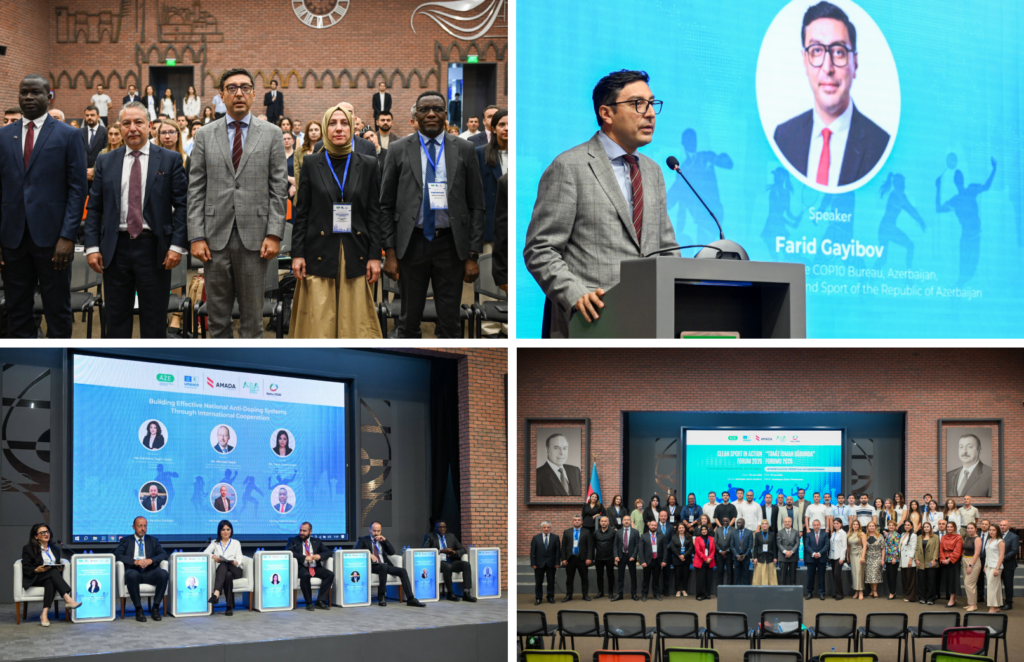
On 30 June 2026, Baku hosted the Clean Sport in Action Forum 2026, bringing together national institutions, international organisations, anti-doping experts and sport stakeholders to discuss clean sport, fair play, athlete protection and the development of effective anti-doping systems.
The one-day forum was held at the Azerbaijan Sports Academy in a hybrid format and was conducted in English. It was jointly organised by the Ministry of Youth and Sports of the Republic of Azerbaijan, the Azerbaijan National Anti-Doping Agency (AMADA) and the Azerbaijan Sports Academy, in partnership with UNESCO’s International Convention against Doping in Sport.
Held under the theme “Promoting Sport Integrity, Fair Play, and Anti-Doping Awareness”, the forum aimed to create a multi-stakeholder platform for dialogue between international and local experts, representatives of anti-doping institutions, sports federations, athletes, coaches, students and healthcare professionals.
The opening ceremony featured high-level representatives from national and international institutions, including Farid Gayibov, Minister of Youth and Sports of the Republic of Azerbaijan and Chairperson of the COP10 Bureau of UNESCO’s International Convention against Doping in Sport; Gustavo Merino, Director for Social Policies and Inclusion at UNESCO and Executive Secretary of the International Convention against Doping in Sport; Safa Koçoğlu Gürsoy, Deputy Minister of Youth and Sports of the Republic of Türkiye and Rapporteur of the COP10 Bureau; and Fuad Hajiyev, Rector of the Azerbaijan Sports Academy.
The forum placed international cooperation at the centre of the clean sport agenda. Its objectives included increasing awareness of clean sport principles and anti-doping systems, promoting understanding of international anti-doping conventions and compliance mechanisms, strengthening cooperation between national and international stakeholders, and encouraging ethical decision-making and responsibility in sport.
A dedicated international framework session, titled “How the Global Anti-Doping System Works: WADA, UNESCO Convention, and International Cooperation Mechanisms”, examined how the main components of the global anti-doping system interact. Presentations were delivered by Gustavo Merino, Director for Social Policies and Inclusion at UNESCO and Executive Secretary of the International Convention against Doping in Sport; Darren Mullaly, Director of Government Relations at the World Anti-Doping Agency; Jamie Brown, Head of the Anti-Doping Unit at the Council of Europe; and Dr. Tahmina Taghi-zada, Chief Executive Officer of AMADA.
The programme continued with an expert panel on “Building Effective National Anti-Doping Systems Through International Cooperation”, moderated by Dr. Tahmina Taghi-zada. The panel brought together representatives from national and international anti-doping and sport institutions, including Michael Cepic, Chief Executive Officer of NADA Austria; Yana Derevyanko, Head of the Anti-Doping Department at the Ministry of Sports of the Russian Federation; Carlos Peralta Gallego, Director General of the Spanish Commission for the Fight against Doping in Sport (CELAD); İnanç Özçakmak, Deputy Director General for International Organizations and Foreign Relations at the Ministry of Youth and Sports of the Republic of Türkiye; and Raphael Mulenga, UNESCO Convention focal point for Zambia.
The discussion highlighted the importance of strong national anti-doping structures, regular international exchange, institutional capacity and the sharing of practical experience. It also reflected a wider shift in anti-doping policy: effective clean sport systems depend not only on rules and testing, but also on governance, education, health expertise, cooperation and trust.
A further expert presentation session, “Science Behind Clean Sport: Health, Performance and Athlete Well-being”, broadened the discussion by linking anti-doping to sports medicine, athlete health and integrity in practice. Dr. Reema Alhosani addressed traditional pharmacopoeia in the context of sport values, ethics and integrity. Dr. Paulina Kloskowska of King’s College London focused on clean sport through a women’s lens, while Dr. Zarifa Kamilova of the Azerbaijan Sports Academy and University College London examined integrity as a shared responsibility from elite athletes to the general population.
The Clean Sport in Action Forum 2026 also took place in a wider institutional context. As a side event to the COP10 Bureau Meeting of UNESCO’s International Convention against Doping in Sport, the forum provided an opportunity to strengthen dialogue, exchange best practices and promote collaborative action in support of clean sport at both national and international levels.
By convening representatives from UNESCO, WADA, the Council of Europe, national anti-doping organisations, government institutions, academia and the medical community, the Clean Sport in Action Forum 2026 contributed to a wider conversation on how countries can strengthen anti-doping systems while keeping athlete rights, fair competition and public trust at the heart of the clean sport agenda.
For IPSEI, the Baku forum is another reminder that sport integrity cannot be protected by institutions working in isolation. Anti-doping systems are most effective when they are connected to broader questions of governance, athlete protection, public health, education, legal safeguards and public confidence in sport.


Thank you for your rating!
Share your thoughts