Substance risks do not stop at the borders of sport
World Drug Day is a reminder that doping risks are shaped not only by individual choices, but also by online markets, informal supply chains, organised crime, synthetic substances and gaps in governance and regulation.
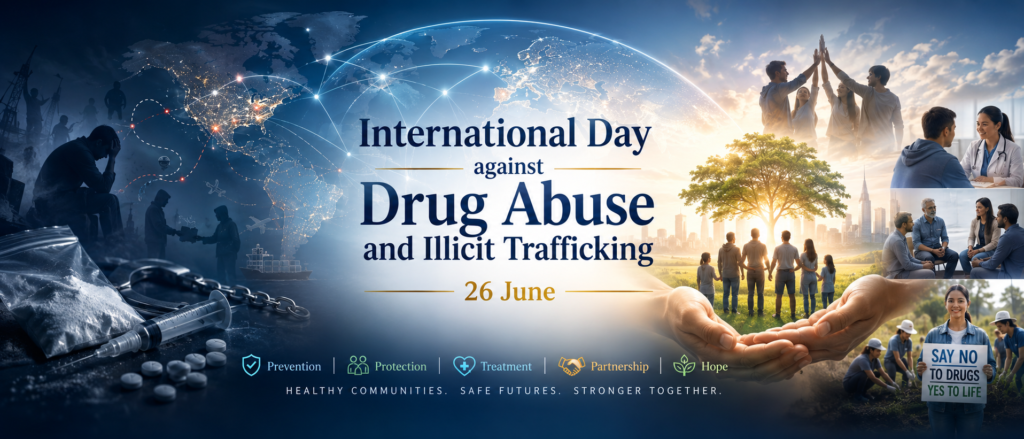
On 26 June, the international community marks the International Day against Drug Abuse and Illicit Trafficking. Established by the United Nations General Assembly in 1987, World Drug Day highlights the need for stronger action and co-operation in response to one of the major challenges affecting societies worldwide.
For the sport integrity community, this day carries an important message. Substance-related risks are no longer limited to one policy field. They increasingly cut across public health, organised crime, youth protection, digital markets, governance, regulation and the credibility of sport.
The global drug landscape is changing. The number of substances on the market has increased over recent decades. Synthetic drugs are becoming more prominent, partly because they can be cheaper to manufacture and harder to detect. Organised crime groups are also adapting quickly, using technology to reach new audiences, expand illicit markets and exploit gaps in governance and regulation.
This wider environment matters for sport.
Doping is often discussed through testing, prohibited substances and sanctions. These tools remain essential for protecting fairness, trust and the credibility of sporting performance. But a broader integrity question also needs attention: how do prohibited or risky substances reach athletes, recreational sport participants and young people in the first place?
Performance- and image-enhancing substances do not appear in sport by accident. Their availability is shaped by online marketplaces, informal supply chains, misuse of pharmaceutical products, synthetic compounds, designer substances, social media promotion and commercial incentives. In many cases, such products are marketed not only as tools for performance, but also as shortcuts to recovery, appearance, strength, endurance, confidence or lifestyle transformation.
International mechanisms already reflect this connection. The WADA Prohibited List identifies substances and methods that are incompatible with the honesty and integrity of sporting performance. The United Nations, through World Drug Day, highlights the need for innovative responses to persisting and emerging drug-related challenges. The Council of Europe’s Pompidou Group also points to balanced, evidence-based and human rights-based responses to drugs and addictions, including digital risks, organised crime, prevention, public health and international co-operation.
These mechanisms have different mandates, but they point in the same direction: substance-related risks cannot be understood only at the level of the individual user. They must also be understood through the environments that make substances available, attractive and accessible.
For sport, this is a crucial integrity issue. Athletes and recreational sport participants may be exposed not only to deliberate doping schemes, but also to a broader substance economy in which risky or prohibited products are increasingly normalised and commercially promoted. The same digital and cross-border channels that affect wider drug markets can also influence the availability of substances relevant to sport.
This does not reduce personal responsibility. It makes the integrity challenge more complete. Protecting fairness means looking not only at the final act of use, but also at supply chains, online promotion, social pressures, commercial narratives and governance gaps that allow prohibited or dangerous substances to circulate.
For IPSEI, this is a key conversation. Anti-doping should remain connected to the wider sport integrity agenda: education, prevention, public health awareness, digital intelligence, cross-border co-operation, athlete protection and supply-side understanding.
This does not replace established anti-doping tools. Testing, investigations, education, results management and sanctions remain essential pillars of the system. But they can be strengthened by a deeper understanding of the environments that make prohibited or risky substances available, attractive and accessible.
The next integrity challenge is therefore not only to detect substances after use. It is also to understand and respond to the markets, technologies, incentives and networks that bring those substances closer to sport in the first place.
Addressing this challenge requires shared responsibility and stronger co-operation among all relevant stakeholders: anti-doping organisations, sport bodies, public health authorities, law enforcement, educators, researchers, policymakers, digital platforms and civil society. Only through a connected and prevention-oriented approach can sport better protect athletes, preserve fairness and strengthen trust in sporting performance.



Thank you for your rating!
Share your thoughts